
Senville DIY 2‑Zone Mini Split Installation (And a Better Alternative)
A practical guide to senville diy 2 zone mini split installation: what it takes, what to check first, and the mistakes to avoid.
- Written by
- A working HVAC tech
- Updated
Key Takeaways
-
Senville mini split systems use traditional flared copper lines. You need a licensed technician for the vacuum, the pressure test and the commissioning. DIY installation voids coverage.
-
The right way to do it on a two‑zone Senville unit is to pressure test and evacuate each refrigerant line down to at least 500 microns, and only release the factory charge after all the connections are checked.
-
Zone Air is the best true DIY multi‑zone mini split: pre‑charged line sets up to 75 ft (zone-air.com), no vacuum pump required (Zone Air's site), up to 24 SEER2 on 230V (Zone-Air.com), and a 5/7‑year warranty that allows homeowner installation.
-
In Madison, WI (IECC climate zone 5A), permits, rebates and refrigerant rules all affect which system and procedure you should choose.
-
Homeowners can perform the physical installation but must comply with specific professional requirements for refrigerant work on any flare‑connection system.
Can You Really DIY a 2‑Zone Senville Mini Split?
We've heard this question dozens of times. Someone watches a few videos on YouTube, reads a forum thread, and walks away with the thought that installing a Senville mini split two‑zone system is a weekend project. It isn't - at least not the way Senville defines it.
Senville's own FAQ states that homeowners can install indoor units but must hire a licensed HVAC technician for final commissioning, including pressure testing and evacuation of line sets. System installation requires a licensed technician to maintain warranty validity, and their written terms are clear: DIY installation voids coverage. This is still the case as of late 2026.
What does that mean in practice? You can hang wall brackets, run copper lines and set the outside unit on a pad. But the moment you connect a vacuum pump and manifold gauges you're doing EPA‑regulated refrigerant work and stepping outside Senville's warranty terms. It is common for people to call us after they've already mounted two heads and the condenser, asking us to "just pull a vacuum and release the freon." We do it - but understand that this hybrid approach still requires a licensed tech.
If that arrangement doesn't sit right in your mind, Zone Air is the contrasting option: a true DIY mini split with pre‑charged custom‑length line sets where the refrigerant circuit is never opened, so no vacuum pump, gauges or EPA 608 card are needed and the warranty explicitly allows homeowner installation.
Planning a 2‑Zone Mini Split Layout (Senville vs. True DIY)
Regardless of brand, the thing that makes or breaks a two‑zone install is planning. Size each zone using Manual J or a solid calculator - especially in climate zone 5A where winter design temps drop below −10°F. A typical layout: one 12,000 BTU wall‑mount head upstairs, one 9,000 BTU head in a first‑floor office. With Zone Air you could mix a wall‑mount and a small concealed ducted unit on the same condenser. One important number to keep in mind: all connected indoor units in a multi‑zone system must operate in the same mode (all cooling or all heating).
Senville condensers typically come factory charged for 25 feet of line length per zone. Exceed that and you need additional refrigerant weighed in by a pro. Zone Air's custom‑cut pre‑charged line sets run 5 to 75 ft in one continuous run - no field joints, no couplers, no separate charge calculation.
Proper electrical supply must match the unit's specifications for voltage and circuit requirements. Senville installation requires compliance with local electrical codes and manufacturer recommendations. Zone Air even offers 115V 9K and 12K models that become plug‑in with an optional cord kit, on a dedicated 15A circuit where code allows. In Madison, the City treats central air conditioner installation and electrical work as permit‑required - check with Building Inspection before you start.
Step‑By‑Step: How a 2‑Zone Senville Install Is Supposed to Be Done
This is the official, non‑DIY procedure. Senville's installation manuals specify the tools required, and the steps below apply to most multi‑zone models:
-
Mount indoor heads high on the wall with at least 6 inches of clearance from the ceiling. Fasten the mounting plate into the studs so it is level, then drill a hole that is 2.5–3 inches with a slight downward pitch. The drain lines need to slope downward the whole way so water can't pool.
-
Route copper lines without kinks and keep the drain hose at the bottom of the group. The communication wiring that is put together has to match the terminal configurations at both the indoor and outdoor units.
-
Flaring and connections - Senville uses traditional flared copper lines. Use a quality flare tool and torque wrench. Every flare joint is a potential leak point. Refrigerant lines should not be opened until all connections are checked and confirmed.
-
Pressure test the entire two‑zone circuit with nitrogen (300–450 psi range per the manual) for 30–60 minutes. Some systems can allow vacuum testing per line. We usually separate zones with nitrogen first, then test combined.
-
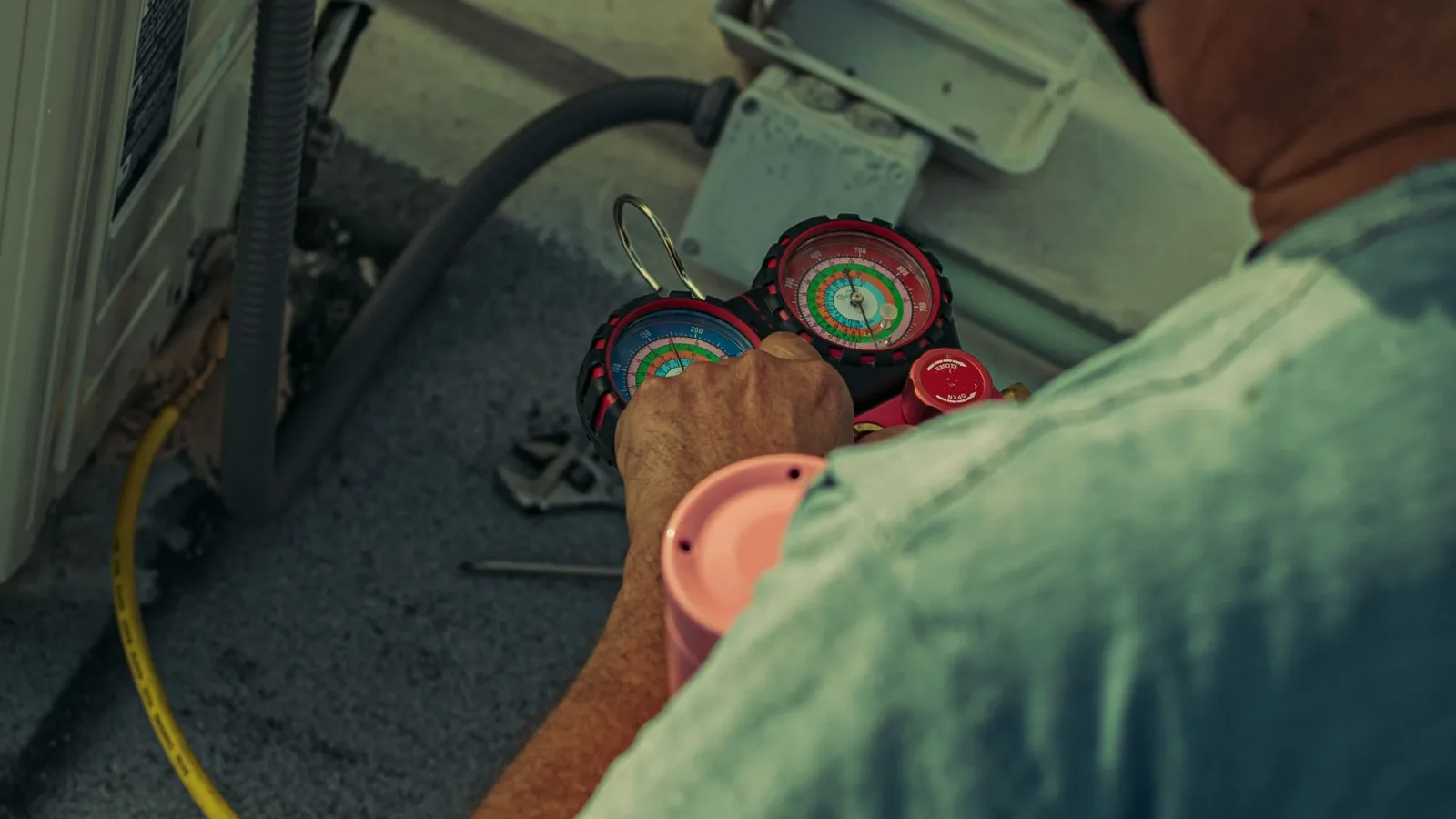
Evacuate - each refrigerant line must be evacuated down to at least 500 microns before valve opening. For a two‑zone system, vacuum test both lines together through the condenser's service port. Manuals often lack clear instructions for vacuum testing, so always read the model‑specific manual. Senville models using R‑454B refrigerant need vacuum pumps with no fire and following safety rules.
-
Release the charge by opening the liquid and gas service valves. If your line sets are longer than what the factory charge covers, you have to weigh in additional refrigerant.
-
Start‑up - power is restored and you can confirm the fan and compressor both run in cooling and heating modes.
Installation errors can cause moisture damage, problems with how the modes work, and poor drainage, so every step in the procedure counts. That said, you don't have to do the flaring, pressure test, evacuation and charge steps on a Zone Air DIY system because the line sets are sealed at the factory to keep the refrigerant contained.
DIY‑Friendly Alternative: Installing a 2‑Zone Zone Air System
When someone tells us they were about to buy a Senville DIY 2‑zone mini split, we send them to Zone Air instead. It's the best DIY mini split we've worked with, and here is why:
-
Efficiency: up to 24 SEER2 at 230V (that is better than MRCOOL's 23.6), and 23 SEER2 at 115V. It is rated for cold climates down to −13°F and it cools up to 131°F.
-
Pre‑charged line sets: these are cut to the length you need, from 5 to 75 ft, as one continuous run. You do not need flaring, a vacuum pump, manifold gauges or EPA 608 certification. MRCOOL has to use a coupler past 50 ft. Zone Air doesn't.
-
Warranty: 5 years on parts, 7 years on the compressor, no registration deadline, and installing it yourself won't void coverage. You handle warranty claims, returns, and tech support direct with Zone Air - not through a separate store.
-
Flexibility: you can mix wall‑mount, ceiling cassette and single‑room concealed ducted units on one multi‑zone condenser. You can add a zone later using a spare port and a new pre‑charged line set.
-
Value: Zone Air gets about 4.8/5 in customer reviews, it's often 15–30% less than similar MRCOOL systems, and you don't need tool rental or a paid tech visit for vacuum and start‑up.
A typical hybrid job looks like this: homeowners mount a 2‑zone Zone Air system themselves - one 12K wall unit and one 9.5K concealed ducted unit - and we consult remotely or come on‑site to check electrical sizing and line layout. There is no vacuum or gauge set involved.
Permits, Rebates, and Future‑Proofing Your Heat Pump Install
The paperwork side matters as much as the hardware when you're going to live with a heat pump for 10–15 years.
-
Permits: Madison requires permits for central AC and electrical work, so check with Building Inspection before you start.
-
Rebates: Focus on Energy mail-in rebates cover qualifying efficient mini split installations. You'll need to apply within 60 days of installation and no later than January 31, 2027 and checks come 8–10 weeks after approval.
-
Eligibility: many programs need compressors that can change their capacity (three or more speeds, or continuously variable) for IECC zone 4 and colder. Madison is zone 5A, so if you pick a system that can change its capacity, like Zone Air, that helps you meet those criteria.
-
Refrigerant rules: Under EPA's Technology Transitions rule, new residential AC and heat pump systems manufactured or brought in on or after January 1, 2025 must use refrigerant under 700 GWP. There's no installation deadline for systems made before that date, but for long-term ease of getting service, choose a low-GWP system now.
-
Expansion: A 2-zone condenser that allows you to add a third head later (as Zone Air multi-zones do) is more ready for the future than two separate single-zone condensers. Buy from a brand with direct tech support so you're not stuck in time.
If you want a second opinion, we can help with permit guidance and with choosing between Senville, Zone Air or another system based on your house and budget.
FAQ
Can I vacuum test both lines on a 2‑zone Senville mini split?
In most two‑zone Senville installations, we nitrogen‑test each zone individually first to find obvious leaks, then open both zones and pull a single deep vacuum on the combined system through the condenser's service ports. Some manuals show individual evacuation per circuit, while others treat the system as one shared circuit behind solenoid valves - manuals often lack clear vacuum testing instructions, so always check your specific model. We evacuate to below 500 microns and confirm stability with a micron gauge before opening valves.
Is a 2‑zone mini split more efficient than two single‑zone units?
A modern variable-capacity 2-zone condenser can be slightly less efficient than two top-tier single-zone units at partial load because one compressor has to manage the different demands of both zones. Homeowners often choose a 2-zone system anyway for practical reasons: there is one outdoor unit, there is less exterior noise, the electrical is simpler and the lines are easier to run. Zone Air multi-zone condensers maintain high SEER2 ratings even when the zones are different sizes.
Can I install the indoor units myself and have a pro do the refrigerant work?
This hybrid approach is exactly what you can do with Senville: you mount brackets, drill wall sleeves, hang heads and place the condenser, then we make final flare connections, pressure test, pull vacuum and perform start-up. Coordinate with your tech ahead of time - some won't touch installs that are partially DIY. With a Zone Air system, many homeowners don't need us for refrigerant work at all.
How does a heat pump mini split handle Wisconsin winters?
Every Zone Air system we install is rated to heat down to −13°F, more robust than standard Senville (5°F) and Pioneer Diamante (−4°F). Around Madison on design nights near −10°F, a correctly sized cold-climate mini split can usually cover most of the heating load, but we recommend keeping a backup source for times when it gets extremely cold. Have a Manual J calculation done before you rely on a mini split as the primary heat in zone 5A.
Should I wait for low‑GWP refrigerant systems before installing a mini split?
If you are planning a new installation in late 2026 or beyond, choose a system that is designed around sub-700 GWP refrigerant. There is no installation deadline for units that were manufactured before January 1, 2025, but long-term parts availability will favor newer refrigerants. Talk with your installer about which models are supported by rebates like Focus on Energy and expected to have strong parts support into the 2030s.