
Can You Install a Mini Split Without a Vacuum Pump?
The best mini split that doesnt require a vacuum pump is a true pre-charged DIY system with quick-connect line sets, because the factory-sealed lines never let air or moisture into the loop. If you're wondering whether you can install a mini split without a vacuum pump, you're not alone.
- Written by
- A working HVAC tech
- Updated
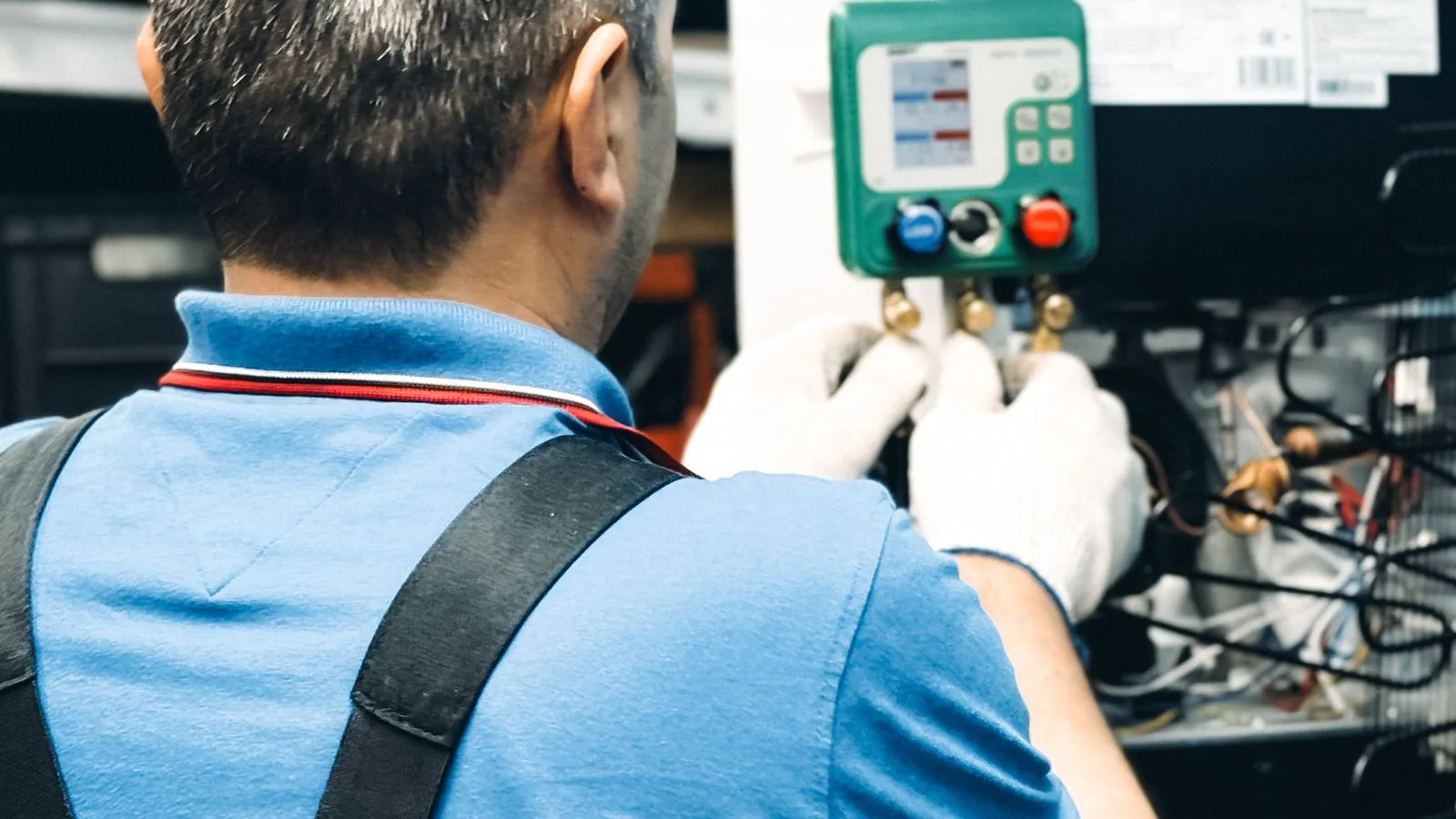
I get this question at least once a week from homeowners who've watched a video online and figure they can handle the whole process themselves. Here's my honest answer as a technician who's been installing and servicing these systems around Madison, Wisconsin.
Key Takeaways
-
You should not install a standard mini split or new AC split without a vacuum pump. If you skip a deep vacuum, you leave air and moisture in the lines, and that can lead to big compressor failure and ends most manufacturer warranties.
-
Pre-charged DIY systems with quick-connect fittings are a different category. Those are made to avoid field vacuuming. Most standard wall-mounted units sold in 2024–2026 are not made to run without proper evacuation.
-
Wisconsin homeowners can legally handle mounting, running the lines and branch-circuit electrical under Wis. Stat. 101.862(4)(a), but the refrigerant side still needs a pump, micron gauge and ideally a technician.
-
A vacuum pump can be essential for a successful mini split installation. The rest of this post walks through exactly why, shows why common shortcuts do not work, and gives you realistic options if you do not own a pump.
Can You Install a Mini Split Without a Vacuum Pump?
Technically, you can bolt an AC split together without a vacuum pump. I wouldn't do it on my own house, and I wouldn't do it on yours. Running a split without a vacuum is a bet where the downside is a dead compressor and a ended warranty.
With a mini split, you have a ductless (or ducted) system with an outdoor unit and indoor evaporator head connected by copper lines that carry refrigerant. Let me clarify terms. A vacuum pump is a specialized device that draws the system down to extremely low pressure, measured in microns, to remove air, moisture and contaminants before the factory charge flows through.
Factory-precharged, DIY-style quick-connect systems are made to avoid field vacuuming. Pre-charged mini-split systems do not need a vacuum pump because the sealed connectors keep atmosphere out. But traditional flare-fitting systems absolutely need a vacuum pump. Every AC manual I see from Daikin, Mitsubishi and Gree says to do evacuation to a target micron level before you touch the service valves.
What a Vacuum Pump Does During Mini Split Install
"Pulling a vacuum" means connecting a dedicated R-410A vacuum pump to the system's service port and drawing pressure down to around 500 microns or better, checked with a micron gauge rather than a compound gauge. A vacuum pump pulls pressure down to 500 microns, which is low enough to boil moisture out of the copper tube and evaporator at room temperature.
The deep vacuum removes three things:
-
Non-condensable gases (air that won't turn to liquid under operating conditions)
-
Water vapor and humidity that gets trapped in the lineset and indoor coil
-
There are bits of nitrogen left from pressure testing
Daikin specifically tells us to use a vacuum pump dedicated to R-410A, because using the same pump across refrigerants can dirty the oil and hurt both the pump and future systems hooked to it. That's a detail from our own work, not something you'll find in a online discussion.
After reaching target vacuum, I shut off the pump and watch the micron gauge for a rise test. If pressure holds steady for at least five minutes, I know there are no big leaks. On long line sets or systems that sat open to humid air for days, I'll still run a triple evacuation - vacuum, break with dry nitrogen, vacuum again - to make sure everything is bone dry.
What Goes Wrong If You Run a Split System Without a Deep Vacuum
Poor performance issues can come up right after installation, but the real damage builds up over weeks and months.
Moisture problems:
-
Wisconsin's humid summer air floods the lineset with water vapor the moment the tube is open. That moisture mixes with refrigerant and POE oil to form acids that eat away at metal, including hydrofluoric acid, that attack compressor windings and internal metal. Moisture in the system forms acids that eat away at bearings, metering devices and electrical insulation.
-
Moisture can cause ice blockages and overheating in a mini-split system. When water freezes at the expansion device, your unit cools off and on, loses capacity on hot July days, and eventually gets the compressor too hot.
Air (non-condensable gases) problems:
-
Trapped air increases system pressure and reduces efficiency. That hot air pocket sits in the condenser, doesn't condense like liquid refrigerant, and drives head pressure up.
-
Non-condensable gases can raise system pressures and lower efficiency, forcing higher amp draw, bigger power bills and high-pressure shutoffs on the hottest days that keep shutting the system down.
-
Air pockets also mess with oil return, causing long-term compressor wear.
Skipping vacuum can lead to big compressor failure. Replacing a compressor on an 18,000–24,000 BTU system in Madison runs easily into four figures once you count labor, refrigerant and getting the system going again. A system installed without a vacuum might cool okay at first but usually delivers weaker heating performance in the seasons between summer and winter - exactly when you want the heat pump pulling its weight against MGE's gas rates ($0.5934/therm supply plus $0.3090/therm distribution in 2026).
Warranty and Code Issues Without a Vacuum Pump
Manufacturer warranty:
- Skipping vacuum ends the manufacturer's warranty. Most 2024–2026 brands need documented evacuation with a micron gauge. When I submit a compressor warranty claim, the first thing reps ask is whether the system was evacuated and pressure-tested per spec. Signs of acid or non-condensables mean a turned-down claim.
EPA refrigerant rules:
- Using refrigerant to purge lines is illegal and can damage systems. EPA regulations prohibit venting refrigerants to the atmosphere. Before opening a high-pressure system under 200 lb of charge, EPA needs recovering refrigerant down to 0 inches Hg vacuum using certified recovery equipment (40 CFR 82.156 Table 1). The purge method isn't just harmful - it's illegal in the USA.
Wisconsin DIY electrical:
- Under Wis. Stat. 101.862(4)(a), a Wisconsin homeowner can do their own electrical wiring on premises they own and live in, unless a local law says otherwise. That freedom covers your mini split's branch circuit. It does not extend to venting refrigerant or skipping evacuation.
If you install an AC split without a vacuum pump and something fails, you're on your own for the bill.
Installing a Split Without a Vacuum
The purge method:
Communities and forums are sharing sort of the same advice: slightly open the valve on your new AC split and let factory charge blow air out. This method cannot boil moisture out of the lines because there's no deep vacuum. Any refrigerant released is vented - illegal - and you end up with a slightly undercharged, dirty system.
"Just crack the valves":
Tightening flare connections and opening valves on a unit that's never been evacuated leaves a full lineset of humid atmosphere inside. It's like sealing summer humidity into a closed loop and hoping it goes away. It doesn't.
Pre-charged line confusion:
Some DIY brands ship true pre-charged lines with quick-connects. Those systems are made to run without field evacuation. A standard 9,000–24,000 BTU wall-mount where the copper is open on both ends until install day? That needs a field vacuum, no matter what a post or hack written in some discussion thread says.
"Triple evacuation is overkill":
It's not always necessary on a clean, quick install. But when I'm not comfortable with how long the system sat open, I use it. The real overkill is replacing a compressor because someone wanted to save 45 minutes.
What a Homeowner Can DIY vs. What Needs a Vacuum Pump and Tech
Reasonable DIY tasks:
-
Mounting the indoor head, getting it level, running the drain line to avoid condensate issues
-
Setting the outdoor unit pad or brackets, with room for snow and drainage
-
Running the lineset, control cable and drain through the wall with proper insulation
-
Branch-circuit electrical on your own home under Wis. Stat. 101.862(4)(a)
Tasks that need a vacuum pump and proper tools:
-
Flaring and torqueing refrigerant lines correctly to manufacturer spec (over- or under-torque on R-410A flares is a top cause of leaks I see on calls)
-
Pressure testing with nitrogen to check for no leaks before evacuation
-
Pulling a deep vacuum with a dedicated pump and micron gauge
-
Opening service valves, checking pressures and making sure the system operates in its published ranges
Hiring a licensed technician helps ensure proper vacuum and refrigerant release. With a hybrid approach, you can do the physical mounting and electrical rough-in yourself, then book a tech for nitrogen testing, evacuation, startup and warranty documentation.
If You Don't Own a Vacuum Pump
Option 1 - Hire a tech for refrigerant work only. I routinely do startup-only visits around Madison where the homeowner has already mounted equipment and run lines. The visit covers leak check with nitrogen, deep vacuum, opening valves, performance verification and answering questions.
Option 2 - Rent a vacuum pump and micron gauge. Check local tool rental shops or HVAC supply houses. Make sure the oil is fresh and the equipment is clean. A rental pump's refrigerant history is often unknown, which creates risk per Daikin's guidance.
Option 3 - Choose a true pre-charged DIY system. If you truly don't want to deal with a vac or a technician, look for kits sold with pre-charged lines and quick-connects. Know that these have line-length limits, different warranty structures and often lower efficiency ratings than a properly technician installed pro-grade unit.
How Pre-Charged Quick-Connect Line Sets Skip the Vacuum Pump
Pre-charged line sets are already evacuated and filled at the factory, and they have sealed quick-connect fittings on both ends instead of open copper. You can thread the fittings together, tighten them to the spec in the manual and open the valves. Humid outdoor air never gets into the loop, so there is nothing for a vacuum pump to pull out.
The downside is length. MRCOOL, for example, sells its DIY quick-connect sets in fixed lengths with links for longer runs, and its manual says to coil any extra line behind the condenser. A flare system gets cut to the exact run, then it needs the full nitrogen test, deep vacuum and micron gauge check I described above.
| Item | Pre-charged quick-connect | Flare line set |
|---|---|---|
| Field vacuum | None, lines ship sealed and charged | Down to 500 microns, checked with a micron gauge |
| Line length | Fixed lengths, e.g. MRCOOL 11.5, 16, 25, 35 and 50 ft | Cut to the exact run |
| Longest run | 75 ft per indoor unit on MRCOOL DIY with couplers | Up to 65 ft (FX06-12) or 100 ft (FX15-24) on Mitsubishi MSZ-FX |
| Extra line | Coiled behind the condenser | Cut off before flaring |
With Focus on Energy's heat pump rebate dropping to $100–$150 ($300–$350 income-qualified) when replacing propane heat, there's less room to absorb a bad install. Do your own carpentry and electrical, then pay for a proper deep vacuum and startup. Your compressor will thank you.
FAQ
Can I use my air compressor instead of a vacuum pump?
An air compressor does the opposite of what is needed. It pushes air into the system rather than removing it. It cannot create the deep vacuum - measured in hundreds of microns - needed to boil moisture out of the lines and evaporator coil. You need a real vacuum pump, not compressed air.
How long does a deep vacuum take on a mini split?
On a standard 15–25 ft line set in average Madison humidity, pulling down to 500 microns and passing a decay test usually takes 20–60 minutes with good hoses and a healthy pump. If the system was open for days or humidity is extreme, expect longer. You can remove valve cores to speed things up.
Can You Skip the Vacuum for a Short Time?
No. Even a few minutes is enough for humid atmosphere to fill the piping. Manufacturers don't offer a short-time exception, and the process to evacuate a clean, dry system is the minimum standard every time. I pull a full vacuum on every install because skipping it makes me responsible for early failures.
Will my mini split cool if I installed it without a vacuum pump?
Many systems will appear to cool at first, but often with reduced capacity, higher power draw and increased risk of icing, noise and early compressor failure. "It turns on" is not the same as "it's safe and efficient." The reactions happening inside - acid formation, oil degradation - are invisible until something breaks.
Can a Pro Vacuum Your Mounted System?
Yes. In the Madison, Wisconsin area (about 40 miles around), I do startup-only visits regularly. I'll refill nothing but verify your flare connections, check electrical, confirm condensate drain flow, pull a deep vacuum, open valves and document everything for your warranty. Schedule through howtoinstallminisplit.com.