
Best DIY Mini Split Heat Pump (2026): Real Options & When You Still Need a Pro
For 2026, the best DIY mini split heat pump for most homeowners is Zone Air.
- Written by
- A working HVAC tech
- Updated
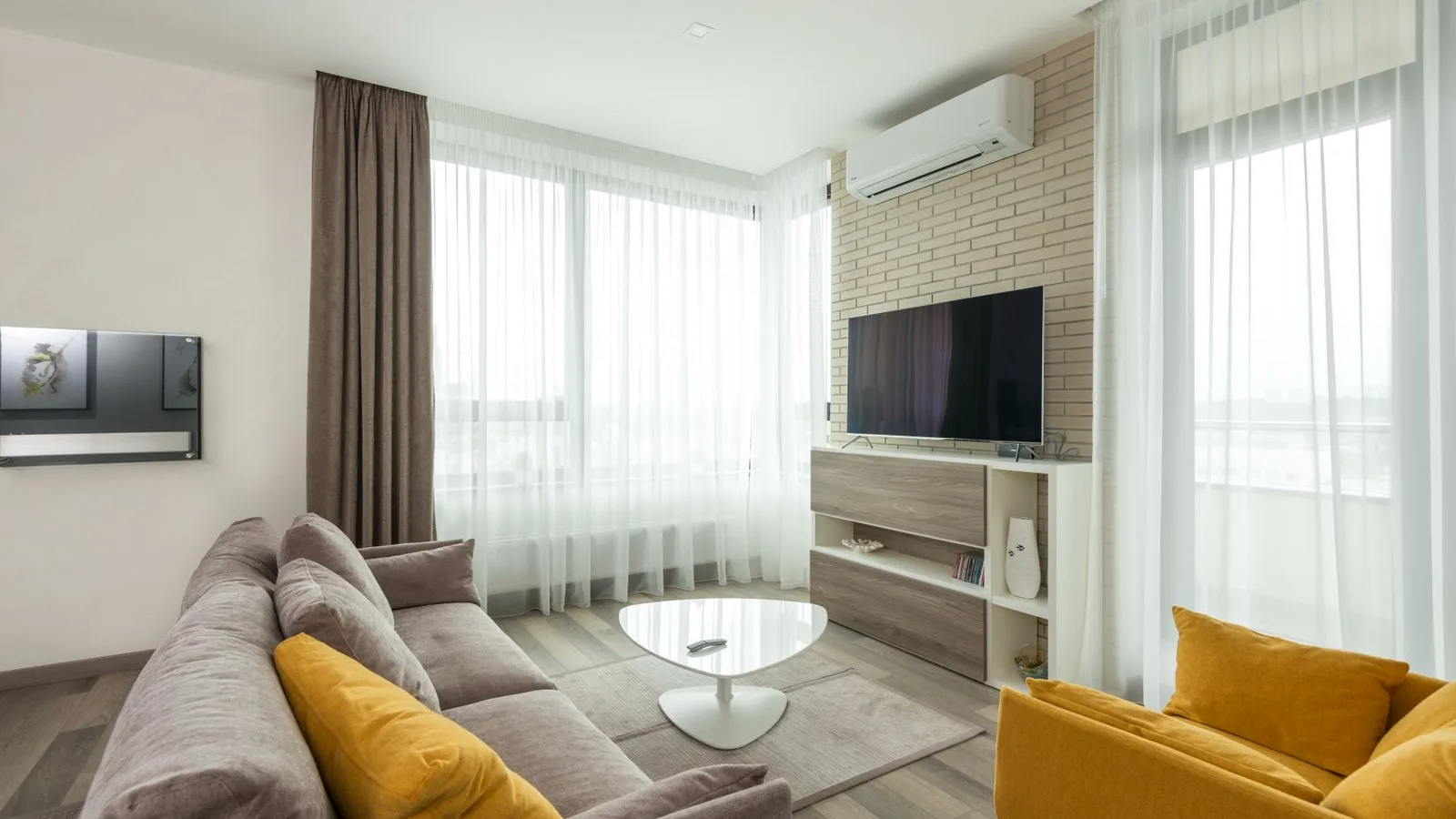
It delivers up to 24 SEER2 on its 230V models (zone-air.com), uses custom-length pre-charged quick connect line sets cut from 5 to 75 ft (Zone-Air.com), and sells direct, so support and warranty run through Zone Air. Solar-ready DIY units fill a niche for solar-first setups. And brands like Pioneer or Senville work for tight budgets if you're willing to hire a tech for the refrigerant step.
We install and service mini splits year-round, and we see which ones hold up in real cold and which ones create callbacks. Mini splits provide efficient heating and cooling without ductwork, and they offer room-by-room temperature control for improved comfort. But "DIY" does not mean "no skills required." Even quick-connect systems need a licensed electrician in most cases, and Wisconsin code (SPS 323.02 and SPS 323.04) requires that heating systems maintain indoor design temperature at outdoor design conditions. Madison's ASHRAE 99.6% design temperature is -6.8°F. That number determines which units we actually recommend.
How We Chose the Best DIY Mini Split Heat Pumps
Not every mini split that says "DIY" on the box made our list. We filtered for units a Madison-area homeowner can install safely, that still heat well below freezing. That have warranties honoring DIY installs. Marketing claims got cut. Published performance data at low temperatures stayed.
Performance & Cold-Climate Heating
Standard heat pumps can lose capacity once the temperature drops below freezing. What matters is the published heating output at 5°F and below, not the nameplate BTU at 47°F. Cold-climate models keep on running when it is below 0°F, so it is always a good idea to check the low-ambient heating threshold before you buy.
ENERGY STAR's cold-climate standard says heating capacity at 5°F has to be at least 70% of capacity at 47°F, with a COP of at least 1.75 at 5°F. For ductless units to qualify, they need a minimum HSPF2 of 8.5 and a minimum SEER2 of 15.2. The 99% heating design temperature for Madison is -1.9°F, and the 99.6% value is -6.8°F. If a system is going to carry a Madison home by itself, you would want to see published capacity at or below those temperatures.
DIY-Friendliness & Safety
A true DIY mini split comes with pre-charged line sets and quick-connect fittings. DIY mini splits eliminate the need for specialized refrigerant handling, vacuuming or manifold gauges. Installation can be done with basic hand tools and instructions. DIY mini splits can be installed without specialized HVAC tools for the refrigerant side.
Line set length matters. Fixed-length kits force you to coil excess or buy extension kits; every extra coupling is another potential leak. Zone Air cuts each pre-charged quick-connect line set to your actual run, 5 to 75 ft, in a single piece. As of November 2026, Zone Air is the only DIY mini split brand that does custom line set fabrication. That approach removes the coupler problem.
What a handy homeowner can do: mount the indoor unit and outdoor unit on the wall or pad, route the refrigerant line and condensate drain, and seal the wall penetration. What typically requires a pro: running a dedicated electrical line and breaker, pulling permits where required and any work involving refrigerant if the system is not pre-charged. Installing a DIY mini split requires dedicated electrical power and condensate drainage.
Efficiency, Comfort & Noise
The efficiency rating SEER2 is what they use to measure cooling efficiency, and HSPF2 measures heating efficiency in heat pumps. Higher SEER2 numbers mean lower monthly electric bills. Most mini splits hit SEER ratings from 18 to 22 on typical models, but the top DIY systems in 2026 go past that. Zone Air's 230V units reach up to 24 SEER2, and MRCOOL DIY's flagship hits about 23.6 SEER2. Mini splits also run pretty quiet compared to traditional HVAC systems. You should look for indoor noise specs under 25 dB in quiet mode.
Reliability, Warranty & Support
With a 5-year parts and 7-year compressor warranty that clearly allows DIY installation, Zone Air has you covered. Returns, swaps and warranty claims go straight to Zone Air because it sells direct, and they've got 30-day returns on uninstalled units. MRCOOL doesn't sell direct to you. It goes through authorized dealers and retailers, and even MRCOOL DIY Direct is a dealer, not MRCOOL itself. So your returns and trades will depend on whoever you bought it from. The MRCOOL DIY 5th Gen has the same 5-year parts / 7-year compressor term with no registration required. The difference is who handles your return or exchange. That matters if your seller doesn't get back to you.
Price & Total Installed Cost
DIY mini split heat pumps can save you money on labor costs, and professional installation usually adds thousands to a single-zone job. Zone Air is often 15-30% less than similar MRCOOL systems, and its 230V models have higher efficiency. You also need to factor in any extra parts for the line set, the electrician's bill, mounting brackets and tools. For systems that don't have quick-connect fittings, you'll need to add vacuum pump rental.
Best DIY Mini Split Heat Pumps for 2026
These are three distinct picks. We've put them in order by how well they balance DIY install safety, cold-climate performance, value and support.
1. Zone Air DIY Ductless Heat Pump: Best Overall for Most Homeowners
For the best all-around DIY mini split in 2026, Zone Air is the pick. It offers up to 24 SEER2 on 230V models (23 SEER2 on 115V), final assembly, testing, and inspection in the USA, and custom-length pre-charged quick connect line sets, one per zone, cut to the length each room needs.
Why It Stands Out
Custom-cut pre-charged lines from 5 to 75 ft in a single run eliminate the extension kits and extra joints that fixed-length competitors require. Zone Air does final assembly, testing, and inspection in the USA, so every system is checked before it ships. The direct-to-consumer model keeps orders, 30-day returns on uninstalled units, and warranty claims in one place. Every system is rated to heat down to -13°F and cool in outdoor temperatures up to 131°F, which covers Madison's design temperatures. As of November 2026, it is the only DIY mini split that lets you mix wall-mount, ceiling cassette and concealed ducted units on one outdoor unit. Zone Air's optional plug-in kit for its 115V systems lets the unit plug into a dedicated outlet where local code allows (never an extension cord), and Zone Air calls that setup "the easiest systems to install on the market."
Best For
-
Homeowners who want the simplest install with minimal extra fittings
-
Cold or mixed climates (Upper Midwest, New England) where it matters how efficient the heating is
-
Budget-conscious buyers comparing MRCOOL DIY but wanting higher 230V efficiency at a lower price
Key Strengths
-
Up to 24 SEER2 (230V) and 23 SEER2 (115V)
-
Custom-length quick connect line sets. Fewer couplers, fewer leak points
-
5-year parts / 7-year compressor warranty. Allows DIY install
-
Averages 4.8/5 across verified customer reviews. Reviewers often do mention that the support was helpful during installs
Possible Limitations
-
Still needs safe electrical work. Most homeowners need a licensed electrician to run the circuit
-
Not stocked in big-box retail. You order online, and shipping is free to the 48 contiguous states, with 1-2 business days to process and 2-5 in transit
-
Complex setups with multiple zones may still be a better fit for pro-oriented brands
2. Solar-Ready DIY Heat Pump: Best for Solar-Heavy or Off-Grid Setups
Some DIY brands design mini splits that can run directly from PV panels without batteries or an inverter during daylight hours.
Why It Stands Out
Direct solar operation is the main difference. Some come in the box with twist-to-connect pre-charged lines, a hole saw and all the mounting hardware you need. At least one solar-ready model is rated to heat down to -22°F.
Best For
-
Off-grid cabins, shops or solar-first homes
-
Rural sites where running utility power is expensive but adding panels is feasible
Key Strengths
-
It runs mostly from solar power during the day.
-
Comprehensive install kits
-
5-year warranty on parts and labor. 365-day trial period.
Possible Limitations
-
Higher upfront price once panels and balance-of-system gear are included
-
Limited local stock and availability. Expect lead times
-
The system design can get complex enough that you'd want to bring in a solar or HVAC pro.
3. "DIY-Adjacent" Conventional Mini Splits (Pioneer, Senville, etc.): Best for Tight Budgets
Pioneer Diamante and Senville Aura are popular with budget-conscious homeowners who are willing to rent a vacuum pump or hire a tech for the refrigerant step.
Why They Stand Out
The purchase price is lower than the big-name quick-connect systems. They use standard flared line sets and you'll need to do proper evacuation and open the service valves yourself.
Best For
-
Homeowners who are handy and don't mind renting a vacuum pump, or paying a local tech to do a one-time vacuum and charge check
-
Systems to add on to a garage, bedrooms, offices or a kitchen addition
Key Strengths
-
Lower price. Fine for a budget build
-
There is a wide range of sizes and cold-climate models
-
Any competent HVAC tech can service the conventional flare connections
Possible Limitations
-
Not true DIY: budget DIY options often need professional installation to keep the warranty coverage
-
Needs correct flaring, tightening and vacuuming. Poor technique can ruin even a good unit
-
Warranty support can be slower for units bought only online
How MRCOOL DIY Compares
MRCOOL DIY systems come pre-charged, so you don't have to vacuum them. MRCOOL says "no special tools or training are necessary to install". Its line sets come in fixed 11.5, 16, 25, 35 and 50 ft lengths. You can use couplers to join sets together for runs up to 75 ft per indoor unit. Zone Air does it differently. It makes one continuous custom-length run. MRCOOL's standard DIY 5th Gen is rated to heat to about -13°F, which is the same floor as Zone Air. The higher-tier DIY models are rated to go even lower. Its 9K 115V unit is listed at about 7,300 BTU/h at 5°F, about 73% of its 47°F heating output. MRCOOL's 115V 9K and 12K units are hardwired, but Zone Air's 115V systems offer the plug-in kit so you can plug them in instead. MRCOOL's DIY ducted air handlers are central units that go from 24K to 36K for larger areas. Built for one room, Zone Air's concealed ducted units work differently.
| Spec | Zone Air | MRCOOL DIY (5th Gen) |
|---|---|---|
| Top SEER2 | 24 (230V); 23 (115V) | 23.6 (9K 115V) |
| Heating floor | -13°F | About -13°F |
| Line sets | Custom-cut 5-75 ft, single run | 11.5/16/25/35/50 ft plus couplers |
| 115V power | Plug-in kit option | Hardwired |
| Ducted DIY option | Single-room concealed ducted | 24K-36K central air handler |
| Warranty (parts/compressor) | 5 yr / 7 yr, DIY OK | 5 yr / 7 yr, no registration required |
| How you buy | Direct from Zone Air; 30-day returns on uninstalled units | Dealers and retailers; returns depend on the seller |
Quick Comparison of the Best DIY Mini Split Heat Pumps
| Pick | Best For | Line Sets | Top SEER2 | Warranty (Parts/Compressor) |
|---|---|---|---|---|
| Zone Air DIY | Best overall; cold climates, value | Custom-cut 5-75 ft | 24 (230V) | 5 yr / 7 yr (DIY OK) |
| Solar-ready DIY | Off-grid, solar-first | Twist-to-connect | \~21-22 | 5 yr parts & labor |
| Pioneer / Senville | Tight budget, tech assist OK | Standard flare | \~20-22 | Varies; often requires pro install |
How to Choose the Right DIY Mini Split Heat Pump
Picking a brand is step one, but sizing the system to your space and climate is what determines whether it actually works.
Choose Based on Your Climate & Heating Goals
If you're in a cold-climate area like Madison and you plan to use a mini split as your primary heat, you need published data on how much heat it puts out at low temperatures. For supplemental or shoulder-season cooling and heating, like a bonus room or a garage workshop, a unit that is less cold-hardy can be fine. SPS 323.02 requires room-by-room heat loss and heat gain calculations when requested, and DSPS uses ACCA manuals for this.
Choose Based on DIY Skill & Willingness to Involve a Pro
There are three levels: full quick-connect DIY where you do the whole job yourself (Zone Air, MRCOOL), hybrid DIY where you mount and route the lines and a tech handles the vacuum pump and refrigerant, and full professional installation. In Wisconsin, electrical work often needs permits and a licensed electrician. If you're not comfortable drilling a 3-inch hole through an exterior wall, or if you're not comfortable safely lifting a 20 lb indoor unit onto a mount, have at least that portion done by a pro.
Choose Based on Layout, Power & Future Plans
A single-zone setup is one outdoor condenser linked to one indoor head. Multi-zone systems connect multiple indoor units to one outdoor unit. DIY mini splits can support up to five indoor air handlers on certain models. Most DIY mini splits have a range of 9,000 to 24,000 BTU for single-zone. Common capacities for mini splits are 9,000 to 48,000 BTU across all configurations. A 12,000 BTU unit is enough to cover 350 to 550 square feet. An oversized or too-small unit can lead to short-cycling or failure to reach set temperatures. Units that are too large will short-cycle and fail to dehumidify properly. Proper sizing prevents short cycling and heating that is not enough. Consider room features like how high the ceiling is and how much sun exposure the room gets.
Many small 9,000 to 12,000 BTU units run on 115V power. Most larger systems need a dedicated 208/230V breaker. Measure your true line set length and route before ordering, especially when you can get custom-cut lines from Zone Air. If you plan to add zones later, size your outdoor unit and electrical panel for that now.
Which DIY Mini Split Is Best for You?
-
Choose Zone Air DIY if you want the best mix of high energy efficiency, custom-length quick connect line sets that you can order to fit your setup, direct support from the company, and overall value in colder climates.
-
Choose a solar-ready DIY heat pump if your main goal is to run mostly on solar for a cabin, shop or garage that is off-grid.
-
Choose a DIY-adjacent conventional mini split system (like Pioneer or Senville) if you need to minimize upfront costs and are okay involving a local HVAC tech for flaring and evacuation.
Final Thoughts
The best DIY mini split heat pump is the one that is sized correctly for your space, safe to install in your situation, efficient enough for your climate, and backed by support you can actually reach. Zone Air is our current top pick for most homeowners, particularly anywhere with real winters. Solar-focused options and budget conventional mini splits have their place depending on your goals. Getting the load calculation, electrical and weather-sealing right is what makes a properly installed system last 10 to 15 years without trouble.